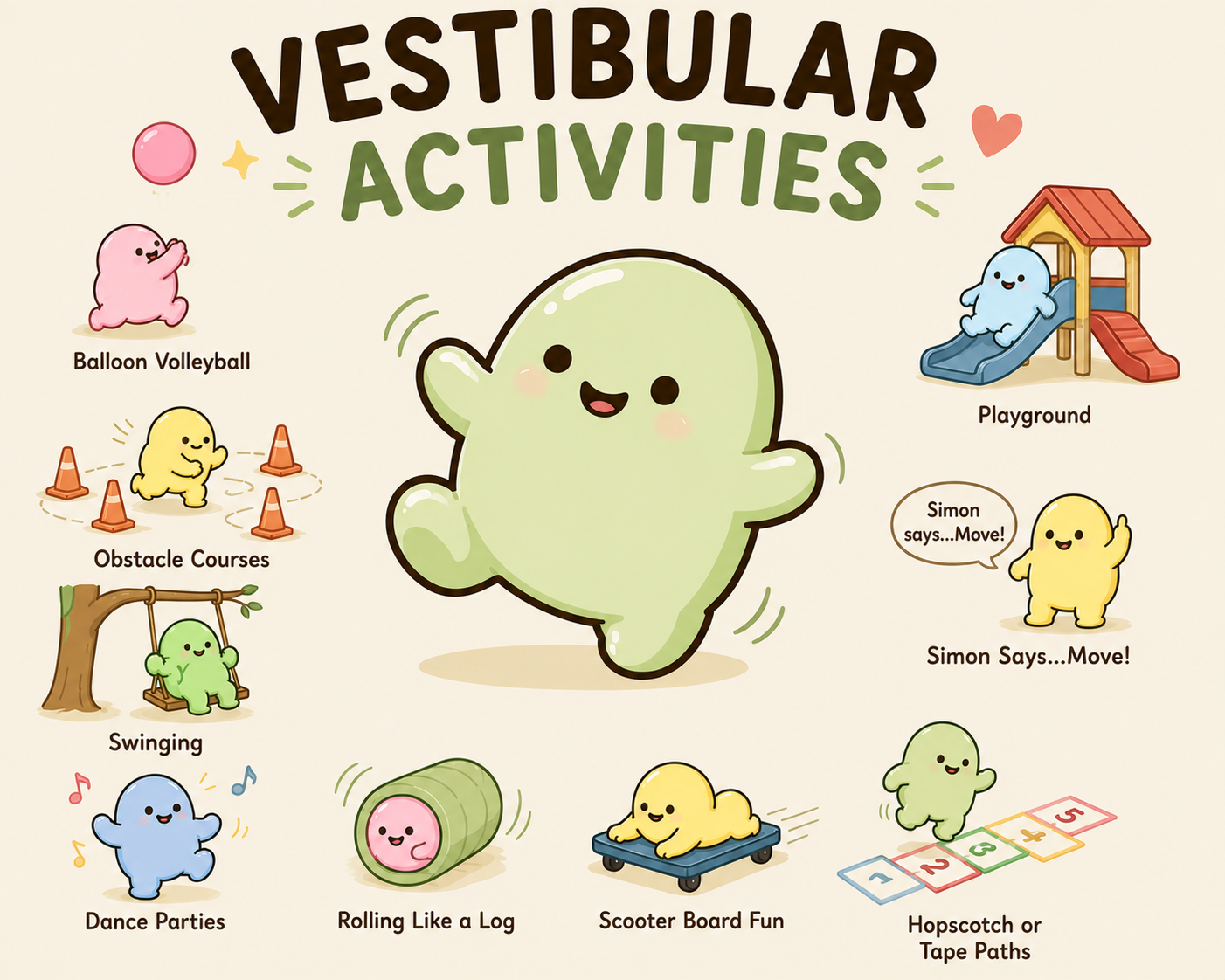
The vestibular system is one of our body's "hidden" sensory systems. Located in the inner ear, it helps us understand movement, balance, and where our head is in space. It also plays an important role in posture, coordination, attention, and body awareness.
Children naturally seek vestibular input through movement—running, jumping, spinning, climbing, and swinging. For some children, especially those with sensory processing differences, providing purposeful movement opportunities throughout the day can support regulation and readiness for learning.
Here are 12 simple vestibular activities that parents and teachers can easily incorporate into everyday routines.
1. Balloon Volleyball 🎈
Grab a balloon and keep it from touching the ground!
Try:
- Tapping the balloon back and forth
- Reaching up high or down low
- Moving side to side to catch it
- Playing with a partner or in a small group
Why it helps: Encourages balance, visual tracking, coordination, and body awareness while providing gentle vestibular input.
2. Obstacle Courses 🚧
Create a simple obstacle course using pillows, chairs, cones, tape lines, or classroom furniture.
Include:
- Crawling under tables
- Stepping over objects
- Balancing along a taped line
- Jumping between spots
Why it helps: Encourages balance, motor planning, and spatial awareness.
3. Swinging 🌳
Use a playground swing or indoor therapy swing if available.
Try:
- Forward and backward
- Side to side
- Gentle circles (only if tolerated)
Why it helps: Provides vestibular input while promoting body awareness and regulation.
4. Dance Parties 💃
Turn on favorite music and encourage children to:
- Spin
- Jump
- Freeze
- March
- Copy movement patterns
Why it helps: Makes movement fun while practicing balance and coordination.
5. Spinning Games 🌪️
Encourage controlled spinning in short bursts, always stopping if a child appears uncomfortable.
Try:
- Spin in place
- Twirl with a scarf
- Dance and spin to music
- Spin, then stop and balance
Why it helps: Rotational movement provides strong vestibular input that helps children develop balance, body awareness, and postural control. Monitor closely, as some children may be sensitive to spinning.
6. Rolling Like a Log 🌯
Lie on the floor and roll across the room with arms overhead.
Challenge children to:
- Roll slowly
- Roll quickly
- Roll to a specific target
Why it helps: Encourages body awareness and controlled movement.
7. Hopscotch ⭐
Use sidewalk chalk outside or painter's tape indoors.
Practice:
- Hopping
- Jumping
- Balancing on one foot
- Following directional arrows
Why it helps: Improves balance and coordination while keeping kids engaged.
8. Balance Beam or Tape Line Walks ⚖️
Use a low balance beam, curb, or a strip of painter's tape on the floor.
Try:
- Walk heel-to-toe
- Walk forward and backward
- Walk sideways
- Balance with arms out like an airplane
- Carry a small beanbag while walking
Why it helps: Challenges the vestibular system by encouraging children to maintain balance while moving, improving postural stability and coordination.
9. Simon Says...Move!
Play Simon Says using movement commands like:
- Spin twice
- Touch your toes
- Hop five times
- Stand on one foot
- March backward
Why it helps: Combines vestibular input with listening and following directions.
10. Playground Fun 🛝
Encourage children to explore movement on the playground.
Try:
- Going down the slide
- Using a seesaw
- Riding a merry-go-round (if available)
Why it helps: Playground equipment provides a variety of movement experiences that stimulate the vestibular system while supporting balance, coordination, body awareness, and motor planning.
11. Scooter Board Fun 🛴
If you have access to a scooter board:
- Pull with hands
- Push with feet
- Navigate around cones
- Complete simple races
No scooter board? Try crawling races instead.
Why it helps: Encourages movement while improving coordination and body awareness.
12. Red Light, Green Light 🚦
Play a game where children move when you say "green light" and stop when you say "red light."
Try:
- Walking
- Running
- Skipping
- Hopping
Why it helps: Starting, stopping, and changing movement patterns stimulates the vestibular system while improving balance, motor planning, and body control.
📌 Important: Movement Breaks Throughout the Day ⏱️
Instead of waiting until children become restless, build movement into routines. Frequent movement opportunities can help children stay engaged and ready to learn.
Ideas include:
- 10 jumping jacks
- 5 spins each direction (if tolerated)
- Marching to the next activity
- Running in place for 30 seconds
💡Tips for Parents and Teachers
- Follow the child's lead and keep activities enjoyable.
- Short movement breaks (2–5 minutes) can be just as effective as longer sessions.
- Every child responds differently to movement. Some enjoy faster activities, while others prefer slower, gentle movement.
- If a child becomes dizzy, uncomfortable, or overstimulated, stop the activity and choose a calmer movement instead.
- Always supervise activities and adapt them to the child's age and abilities.