
From a school-based occupational therapy perspective, a toothbrushing sequencing visual supports much more than oral hygiene—it helps children develop the skills needed for independence in daily routines.
Key benefits:
1. Promotes Independence
Children are still learning multi-step self-care routines. A visual guide (get toothbrush → put on toothpaste → brush teeth → rinse mouth → rinse toothpaste → put toothbrush away) reduces adult prompting and encourages independence.
2. Supports Executive Functioning
Toothbrushing requires planning, sequencing, working memory, task initiation, and task completion. A visual provides an external reminder that helps children complete each step in the correct order.
3. Improves Attention & Follow-Through
Many children rush through brushing or miss important areas. A visual helps them stay on task and complete the entire routine more consistently.
4. Assists Students with Language or Processing Differences
For children with receptive language delays, autism, ADHD, or sensory processing differences, visuals provide clear, predictable information that is easier to understand than verbal instructions alone.
5. Builds Lifelong Self-Care Skills
Consistently following a visual routine supports habit formation and helps children develop an important daily living skill that promotes health and independence.
Toothbrushing visuals are a simple but effective tool for supporting independence, executive functioning, and successful participation in everyday self-care routines. 🪥🦷✨
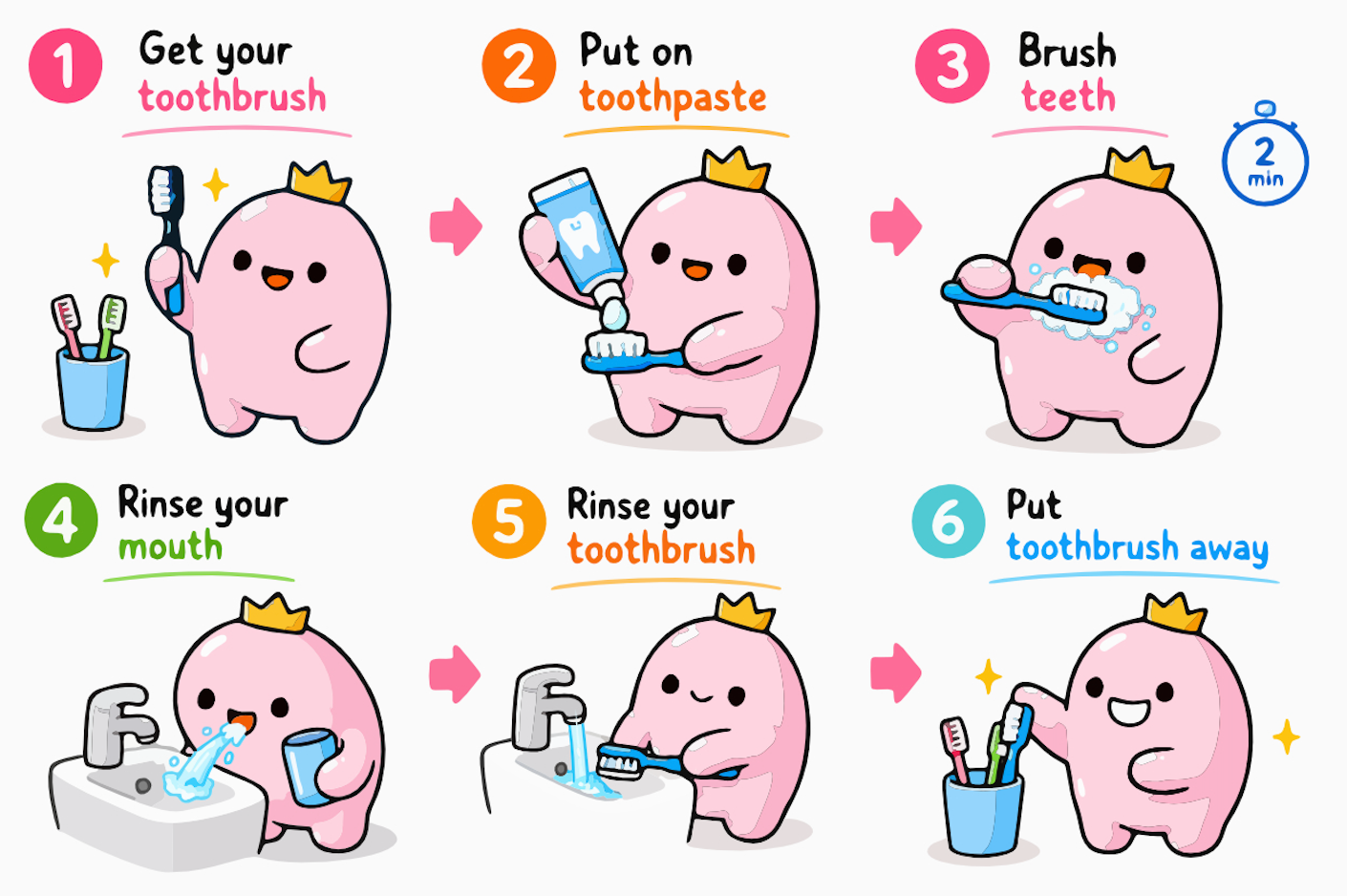
Below is a link to a visual of our ADL Queen, Rosie, brushing her teeth, step-by-step!
Screenshot or download to print this free visual for your friends, students or children below: