The proprioceptive system is one of our body's "hidden" sensory systems. It helps us understand where our body parts are without needing to look at them. Special receptors in our muscles and joints provide information about body position, movement, and the amount of force we're using.
Proprioceptive input is often called "heavy work" because it comes from activities that involve pushing, pulling, lifting, carrying, squeezing, or climbing. Many children naturally seek these activities because they help organize the body and prepare it for learning and play.
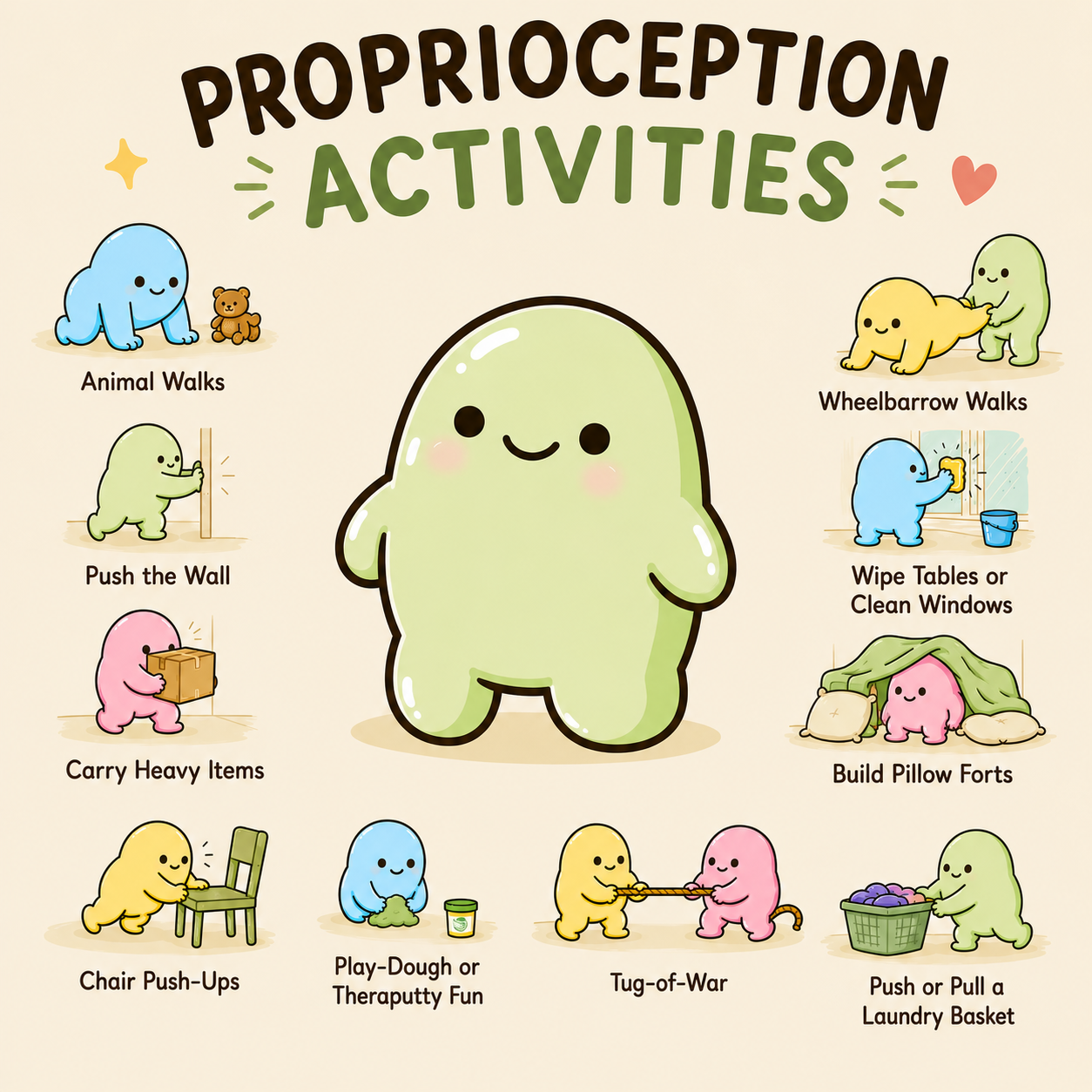
Here are 12 simple proprioceptive activities that parents and teachers can easily incorporate into everyday routines.
1. Animal Walks 🐻
Move like different animals around the room.
Try:
- Bear walks
- Crab walks
- Gorilla walks
- Inchworms
- Frog jumps
Why it helps: These movements provide heavy work through the arms, legs, and core while building coordination.
2. Push the Wall 💪
Have children place both hands on a wall and push as hard as they can for 10–15 seconds.
Try:
- Slow pushes
- Fast pushes
- "Move the wall" challenge
Why it helps: Gives strong proprioceptive input through the shoulders and arms.
3. Carry Heavy Items 📦
Invite children to help carry safe, moderately heavy objects.
Ideas:
- Books
- Grocery bags
- Laundry basket
- Stack of folders
- Classroom supply bin
Why it helps: Carrying weight activates muscles and joints throughout the body.
4. Chair Push-Ups 🪑
While sitting in a sturdy chair, place hands on the seat and push the body upward slightly.
Modify by simply pushing down into the chair if lifting isn't possible.
Why it helps: Provides calming input through the arms and shoulders.
5. Play-Dough or Theraputty Fun 🎨
Encourage children to:
- Roll
- Stretch
- Pinch
- Squeeze
- Hide and find small objects
Why it helps: Strengthens hand muscles while providing rich proprioceptive input.
6. Tug-of-War 🪢
Use a rope, towel, or resistance band.
Keep it fun with short rounds and lots of encouragement.
Why it helps: Provides whole-body resistance through pulling.
7. Wheelbarrow Walks 🚜
Support the child's legs while they walk on their hands.
Adjust support at the hips for younger children.
Why it helps: Delivers heavy work to the upper body and core.
8. Wipe Tables or Clean Windows 🧽
Turn chores into sensory activities.
Try:
- Washing desks
- Cleaning windows
- Scrubbing tables
- Erasing whiteboards
Why it helps: Repetitive pushing movements provide excellent proprioceptive input.
9. Build Pillow Forts 🏰
Have children:
- Carry pillows
- Stack cushions
- Push furniture (with adult supervision)
- Crawl through tunnels
Why it helps: Combines lifting, pushing, carrying, and crawling.
10. Push or Pull a Laundry Basket 🧺
Fill a laundry basket with books, stuffed animals, or blankets.
Children can:
- Push it across the room
- Pull it with a rope
- Deliver "special packages"
Teachers can substitute classroom bins or supply carts.
Why it helps: Heavy pushing and pulling provide strong joint input.
11. Crawl Through Tunnels 🚇
Create simple tunnels using play tunnels, blankets draped over chairs, cardboard boxes, or pillow tunnels.
Challenge children to:
- Crawl forward
- Crawl backward
- Carry a small stuffed animal through the tunnel
- Follow a simple obstacle course
Why it helps: Crawling places gentle, consistent pressure through the shoulders, arms, hands, and core, providing rich proprioceptive input while supporting coordination, body awareness, and motor planning.
8. Yoga for Kids 🧘
Simple poses work well, including:
- Tree Pose
- Downward Dog
- Cat-Cow
- Cobra
- Child's Pose
Why it helps: Weight-bearing and holding poses provide proprioceptive input through the muscles and joints while improving body awareness and postural control.
13. Playground Climbing 🛝
Encourage safe climbing on:
- Ladders
- Rock walls
- Monkey bars
- Climbing structures
Why it helps: Climbing requires children to push, pull, and support their body weight, providing proprioceptive input through the muscles and joints while developing body awareness, strength, and coordination.
Helper Jobs at School Throughout the Day 🤝
Giving children classroom helper jobs is an easy way to incorporate proprioceptive "heavy work" into the school day while promoting responsibility and independence. Everyday heavy work provides proprioceptive input through the muscles and joints, supporting body awareness while encouraging independence and participation in the classroom.
- Moving chairs
- Stacking books
- Carrying lunch trays
- Delivering classroom materials
- Watering plants with a filled watering can
💡Tips for Parents and Teachers
- Build heavy work naturally into daily routines instead of treating it like a separate exercise.
- Offer movement breaks before long periods of sitting or focused work.
- Follow the child's interests to keep activities motivating and enjoyable.
- Choose activities that match the child's age, abilities, and environment.
- Always supervise activities and ensure they are completed safely.