
Drawing, painting, or writing on a vertical surface helps prepare the body and hands for handwriting. When a child works on an easel, chalkboard, or paper taped to a wall, the shoulder and upper-arm muscles help stabilize the arm. This creates a steady base so the wrist and fingers can make more controlled movements.
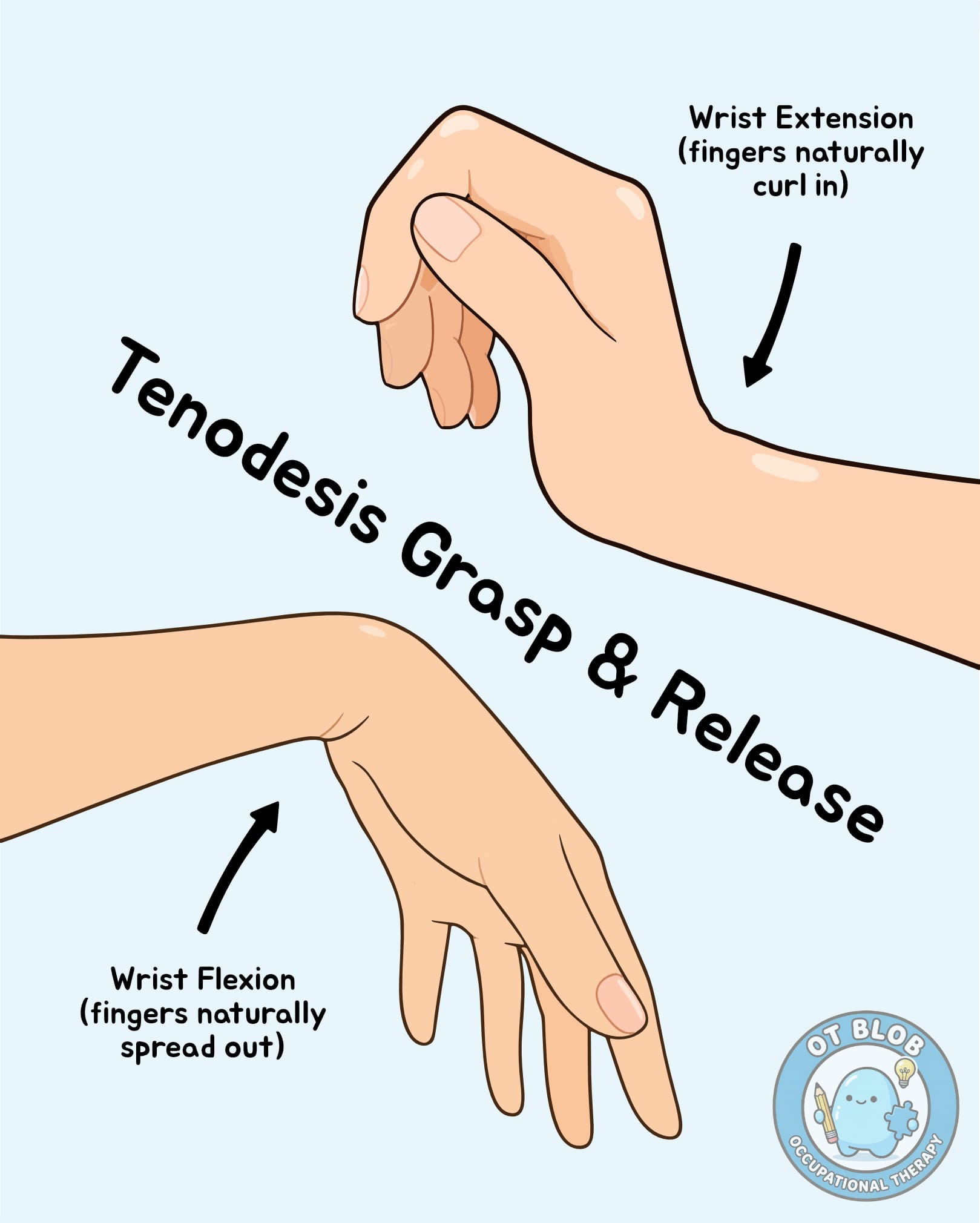
Vertical work also encourages the wrist to extend slightly, meaning it bends back rather than curling forward. This position supports the hand’s tenodesis grasp: when the wrist extends, the finger flexor tendons naturally become slightly tighter, helping the fingers move toward a gently curved position around a crayon or pencil. That does not create a mature grasp by itself, but it can place the hand in a more efficient position for grasping and controlling a writing tool.
In contrast, when the wrist is bent forward, the fingers may open or have less mechanical advantage for precise pencil control. A slightly extended, stable wrist gives the thumb and fingers a better foundation for small movements.
Vertical activities can also support:
- Shoulder and forearm stability
- Wrist extension
- Separation of the two sides of the hand
- Finger isolation and dexterity
- Crossing midline
- Visual-motor coordination
- Practice with large lines and shapes before smaller handwriting movements
The surface should usually be placed around chest-to-eye level so the child can work comfortably without excessive shoulder shrugging.
“Working on a vertical surface strengthens the shoulder, encourages a helpful wrist position, and uses the hand’s natural tendon system to support a curved grasp. This can make it easier for the fingers to control a crayon or pencil.” - Bob the Blob