
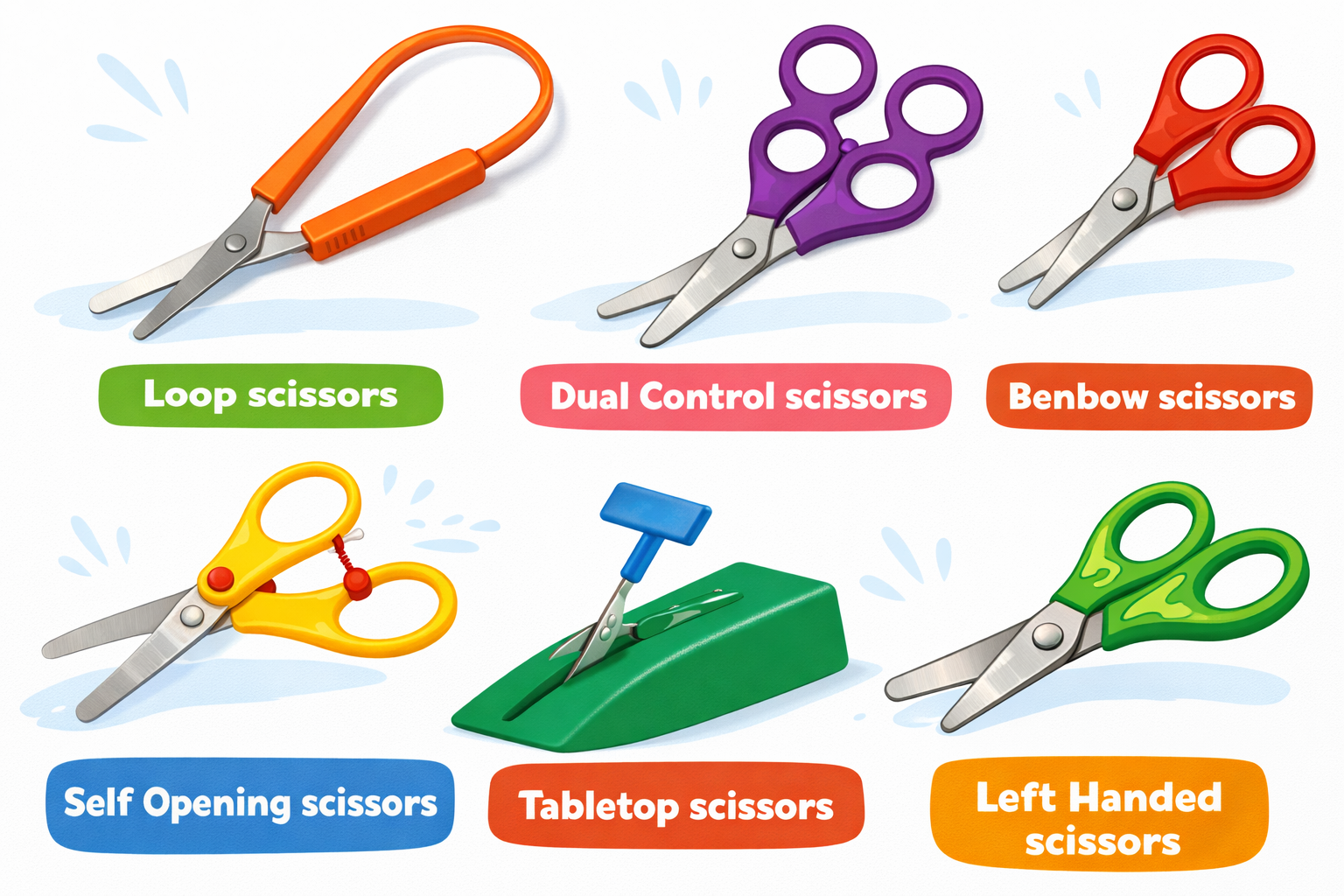
Occupational therapists (OTs) may recommend adaptive scissors to help children participate more successfully in cutting activities at school. Adaptive scissors are tools to support participation while fine motor skills are still developing.
1) Loop Scissors
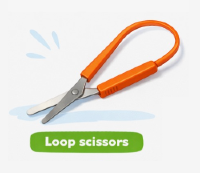
What they are: Flexible plastic loop instead of finger holes. The scissors open automatically when the child relaxes their hand.
Helpful for children who:
- Have very limited hand strength
- Are just learning to cut
- Have difficulty reopening scissors
Why they help: Allow children to focus on making snips without worrying about opening the scissors.
2) Dual Control Scissors
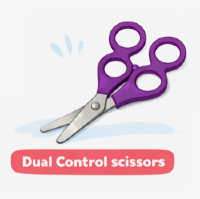
What they are: Scissors with two sets of handles—one for the child and one for an adult.
Helpful for children who:
- Need hand-over-hand support
- Are learning cutting safety
- Benefit from physical guidance
Why they help: Adults can guide the motion while the child actively participates.
3) Benbow Scissors
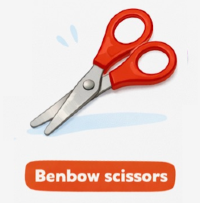
What they are: Scissors that feature small, vinyl-coated loops that encourages finger isolation and shorter length to increase success and reduce frustration.
Helpful for children who:
- Have smaller hands and are just learning to cut
- Use awkward wrist or arm positions when cutting
- Have mild coordination or motor planning difficulties
Why they help: Promote proper cutting posture without constant verbal reminders.
4) Self-Opening Scissors
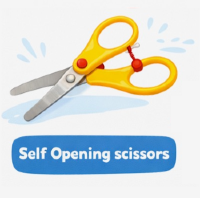
What they are: Scissors with a spring that automatically opens the blades after each cut.
Helpful for children who:
- Have low hand strength
- Fatigue easily during cutting tasks
- Can close scissors but struggle to reopen them
Why they help: Reduce effort while still using a traditional scissor grasp.
5) Tabletop Scissors
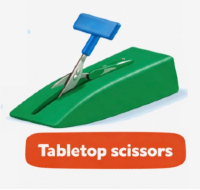
What they are: Scissors mounted on a base that cut when pressed down.
Helpful for children who:
- Use only one hand
- Have significant motor challenges
- Cannot safely manage handheld scissors yet
Why they help: Provide access to cutting activities even when traditional scissors are not possible.
6) Left-Handed Scissors
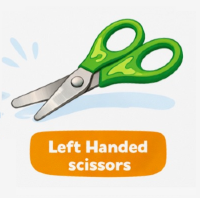
What they are: Scissors with reversed blades designed specifically for left-handed use.
Helpful for children who:
- Are left-hand dominant
- Struggle to see the cutting line with regular scissors
Why they help: Improve accuracy and reduce frustration. This is an access issue—not a skill issue.